
A customer emails your support team on Monday. Calls on Tuesday. Sends a WhatsApp message on Thursday because no one followed up. By Friday, they’re annoyed, not because the issue was complex, but because they had to explain it four times.
That’s the quiet problem many businesses live with. Not broken service. Disconnected service.
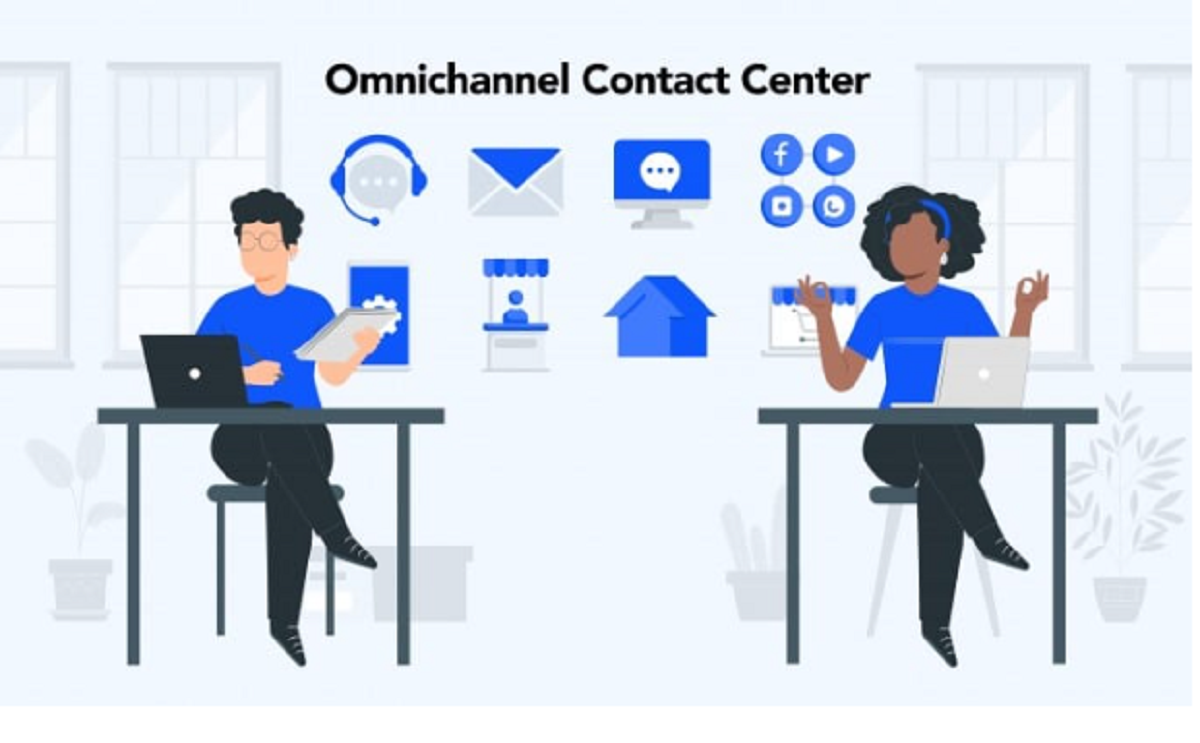
An Omnichannel Contact Center fixes that disconnect. Not by adding more tools, but by making the ones you already use work together in a way customers expect, and teams actually enjoy using.
Customers Don’t Think in Channels. They Think in Conversations.
People don’t wake up thinking, “I’ll start with email, then switch to a phone call.” They just reach out in the moment that feels easiest.
One day, it’s a chat during lunch. Another day, it’s a call while driving. Sometimes it’s a quick message late at night. They expect the business on the other side to keep up.
When each channel works in isolation, agents lose context. Customers lose patience. A shared CRM system tied to an omnichannel contact center keeps the full story visible, past messages, call notes, order history, and even unresolved issues. No guessing. No awkward pauses.
That alone changes the tone of every interaction.
What Happens Inside the Team Matters Just as Much
Disconnected channels don’t just frustrate customers; they also undermine customer loyalty. They wear down support teams.
Agents jump between tabs. They copy notes from chat to email. They ask customers to repeat details because the traditional Call center software doesn’t show what happened earlier. Over time, good agents get tired of apologizing for systems they don’t control.
With the help of an omnichannel contact center solution gives agents one place to work. Calls, chats, emails, and social messages are visible in a single view, connected through the CRM system. Agents spend less time hunting for information and more time solving problems.
That shift shows up in faster responses, calmer conversations, and lower burnout.
A Small Retail Brand, a Big Wake-Up Call
A growing online retailer once relied on phone support and email. Sales climbed. Messages exploded. Customers started using Instagram DMs to ask about orders.
The team treated each channel separately. The same customer had three open conversations with three agents. Refunds were delayed. Trust slipped.
Once they moved to an omnichannel contact center, every message, phone, email, social, landed in one shared queue. The CRM system showed order history instantly. Agents stopped duplicating work. Response times dropped within weeks.
No flashy changes. Just better coordination.
Why CRM Alone Isn’t Enough
Some businesses assume a CRM system by itself solves the problem. It doesn’t, at least not without proper contact center integration.
A CRM stores data. An omnichannel contact center solution puts that data to work in real time. When the call center software is connected directly to the CRM, agents don’t need to search or switch screens. Customer context appears as the conversation starts.
That small detail changes everything. Customers feel recognized. Agents feel prepared.
Furthermore, managers finally get clear visibility into what’s happening across every channel, not just phone calls.
Voice Still Matters, It Just Can’t Stand Alone
Chat and messaging get attention, but voice support isn’t going anywhere. When something feels urgent or emotional, people still pick up the phone.
Modern call center software fits naturally into an omnichannel contact center. Calls are recorded, logged, and tied to the same customer record as chats and emails. If a call drops, the follow-up message doesn’t start from zero.
That continuity builds confidence. Customers notice when businesses remember.
What Businesses Miss When They Delay This Shift
Waiting too long creates subtle damage:
- Agents rely on personal notes instead of shared data
- Customers repeat themselves and feel ignored
- Managers see partial reports that hide real issues
- Teams spend money on tools that don’t talk to each other
An omnichannel contact center brings structure without adding friction. It replaces patchwork workflows with a single, clear system that aligns with how customers actually behave.
How to Tell If You’re Ready?
You’re probably ready if any of these sound familiar:
- Customers switch channels mid-conversation
- Agents ask for screenshots of past chats
- The CRM system is updated after conversations, not during
- Call center software reports don’t match chat performance
- Social messages feel like an afterthought
These aren’t signs of failure. They’re signs of growth outpacing systems.
Practical Takeaways That Actually Help
Before jumping into a new setup, a few grounded steps make the difference:
- Map how customers really contact you, not how you want them to
- Choose an omnichannel contact center that connects deeply with your call center CRM system, not just loosely
- Make sure choose call center software shows chat and email history before agents answer
- Train agents on conversation flow, not just tool usage
- Track resolution across channels, not channel by channel
Small adjustments compound quickly when channels stop competing and start working together.
The Quiet Payoff
The real benefit doesn’t show up as a flashy metric right away. It shows up in calmer conversations. Shorter explanations. Agents who sound confident instead of rushed.
Customers feel like they’re dealing with a business that remembers them.
That’s what an omnichannel contact center brings to the table. Not noise. Not complexity. Just continuity, handled well, behind the scenes, where it belongs.