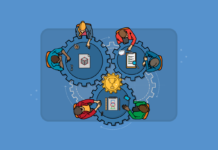

Scaling your startup feels like jumping onto a fast-moving train. Exciting, exhilarating… and a little scary.
Your original startup business plan might have worked when it was just you and a laptop in a coffee shop, but now?
Things are different.
How do you adapt your plan when new markets open, investors ask tough questions, or your team doubles overnight?
Sticking to the old blueprint could slow you down or, worse, steer you off track.
Think of your business plan like a GPS. It is not just about the destination anymore. It became about recalculating routes, avoiding roadblocks, and finding shortcuts you never imagined.
Ready to learn how to update it without losing momentum?
Why your startup business plan can’t stay static
A business plan is not a “set it and forget it” document. The landscape changes as your startup grows. Customer needs change, competitors may switch to different product lines to gain a competitive edge, and opportunities can come from unexpected sources.
A strategy that was successful at one time may be unsuccessful in the near future.
The process of improving a plan involves assessing the company’s current position, identifying what has worked well for them in the past, and altering the methods that have proven effective in response to the change to accommodate their current level of success.
When it comes down to it, treating a plan as a continuously evolving, “living” document enables the business owner and his or her staff to better understand the company’s direction and provides investors and others with the confidence to invest in or work with the company.
Once you have identified your business’s goals, how do you prioritize those updates?
1. Reassess your market and audience
The startup business plan was likely created based on early assumptions regarding your target market. As your Business grows, so do these early assumptions. Since Customer behavior is constantly changing, new market segments will emerge, and more competitors will enter this marketplace. By reviewing your Market Research again, you will begin to identify potential areas of Improvement and Avoid Common Mistakes Regarding Expensive Customer Acquisition. Targeting the Correct Audience.
How Does Your Customer’s Need Change Over Time?
Using the actual information you receive from the Market Research, make adjustments to your Messaging, Positioning, and Growth Strategies.
2. Update financial projections
When you scale up your business, you will create new costs, new revenue, and, in many instances, new funding (investment) rounds.
As a result, your previous financial model may no longer reflect actual data. Cash Flow, Operating Costs, and Revenue Projections should all be updated regularly to keep your financial plan current.
Include scenarios for best-case, expected, and worst-case growth. Investors and stakeholders love seeing that you have thought through multiple outcomes, and it helps your team plan with confidence.
3. Refine your product or service strategy
Your initial product might have been a simple MVP. Now that your startup is growing, consider how your offerings need to evolve.
Are there new features customers are asking for?
Can you streamline operations to scale production or service delivery efficiently?
A product-focused update to your startup business plan ensures that innovation keeps pace with growth while keeping your team aligned on priorities.
4. Revisit the marketing and sales plan
What brought your first customers might not drive your next wave. Marketing channels, messaging, and sales tactics all need to evolve as scale increases. Analyze performance data and refine strategies to maximize ROI.
Whether it is shifting to new social platforms, exploring partnerships, or optimizing your sales funnel, updating the section ensures your growth strategy remains sharp and actionable.
5. Strengthen team and operations
Responsibilities shift, and new roles emerge just as your team starts to grow. Your Business Plan Ireland should reflect these changes. Include updated organizational charts, hiring plans, and operational workflows.
A clear structure helps new employees get on track faster, reduces confusion, and signals to investors that your scaling is strategic, not chaotic.
6. Reevaluate your company landscape
As your startup scales, new competitors enter your space and existing ones evolve. Take a fresh look at who you are up against. Are there startups disrupting your niche? Are bigger players shifting their strategy?
Updating your competitive analysis helps you identify threats, uncover market gaps, and refine your unique value proposition. Staying proactive prevents surprises and positions your startup ahead of the curve.
7. Integrate technology and tools
Complexity often is the route to growth. Processes that were made with a small team may slow down the progress and growth at scale. Evaluate technology, automation, and tools that can streamline operations, improve collaboration, and enhance customer experience.
Include these updates in your startup business plan to show stakeholders you are prepared to handle growth efficiently. Even small tools can make a huge difference.
8. Reassess your funding strategy
Your early-stage plan might have been bootstrapped or funded with seed capital. As you scale, consider your options:
Venture capital, angel investors, loans, or strategic partnerships.
Updating your funding strategy in your plan helps you plan for the resources needed to grow, while demonstrating to investors that you have a thoughtful, realistic approach to financing expansion.
9. Adjust your risk management plan
As businesses expand, growth presents both opportunities and threats. Expansion can put pressure on supply chains, create legal issues, and expose companies to financial volatility through economic fluctuations.
Regularly reviewing and updating a company’s risk management strategy is essential to effectively managing these risks.
Managing risk appropriately through proactive measures will protect the company’s current operations while providing peace of mind to investors and employees that the company’s growth is controlled, rather than haphazard.
10. Monitor metrics and KPIs
Finally, scaling without measuring results is like driving blind. Update your plan with key performance indicators (KPIs) and milestones that matter most for your stage of growth.
Track revenue metrics, customer retention, product usage, team productivity, and other relevant indicators. Clear metrics make it easier to pivot quickly and celebrate wins as your startup grows.
Applying the six S framework to scale your startup
The Six S Framework is a powerful tool used by consulting companies to guide startups as they grow. It helps you assess key areas of your business and make targeted updates to your plan. Here is how business plan consulting can help you effectively.
1. Strategy
Your overall vision and growth strategy may evolve as your startup scales. Revisit your goals, target markets, and competitive positioning.
Ask:
Are we pursuing the right opportunities or not?
Are the company’s objectives aligned with the current stage of growth?
2. Structure
The growth of your team requires a change to the organizational structure to ensure reporting lines, roles, and responsibilities are clear and defined. A flexible framework reduces bottlenecks and allows teams to be decisive.
3. Systems
As you scale, operational efficiency is vital. Review your workflow, technology, and automation to enable your startup’s continued operations in the most accurate and responsive way possible.
4. Skills
Scaling your team will require skills beyond what you currently have. Identify any skill gaps and invest in training or hiring to fill those gaps. Ensure your team has the skills to implement your new strategy and effectively address the challenges of growth.
5. Shared Values
In a rapidly growing company, the organization’s culture may begin to change. To maintain cohesion and identify shared values, continually communicate your core values with your employees.
6. Success Metrics
Finally, redefine what success looks like for your organization. Your KPI’s, benchmarks, etc., need to be aligned with where you are in the growth cycle. Measurable goals provide everyone with a means of accountability and alignment in accomplishing them.
Conclusion
The journey of scaling a startup business plan through its business plan is rewarding, but it also brings many challenges.
When you are first starting out, your original business plan provides direction. However, as your company grows, it will require updated plans, reflection on what has been learned so far, and strategic adjustments.
Creating a living roadmap through regularly updating your startup business plan by reevaluating your market, refining your product, strengthening your team, and utilizing frameworks is the best way to adapt to the needs of your growing organization.
In addition, continuing to use updated financial plans, metrics, and risk strategies will help you be prepared for both opportunities and challenges during this process.
Remember, a well-maintained business plan is your guide to scaling confidently, making smarter decisions, and turning your startup’s vision into lasting success.