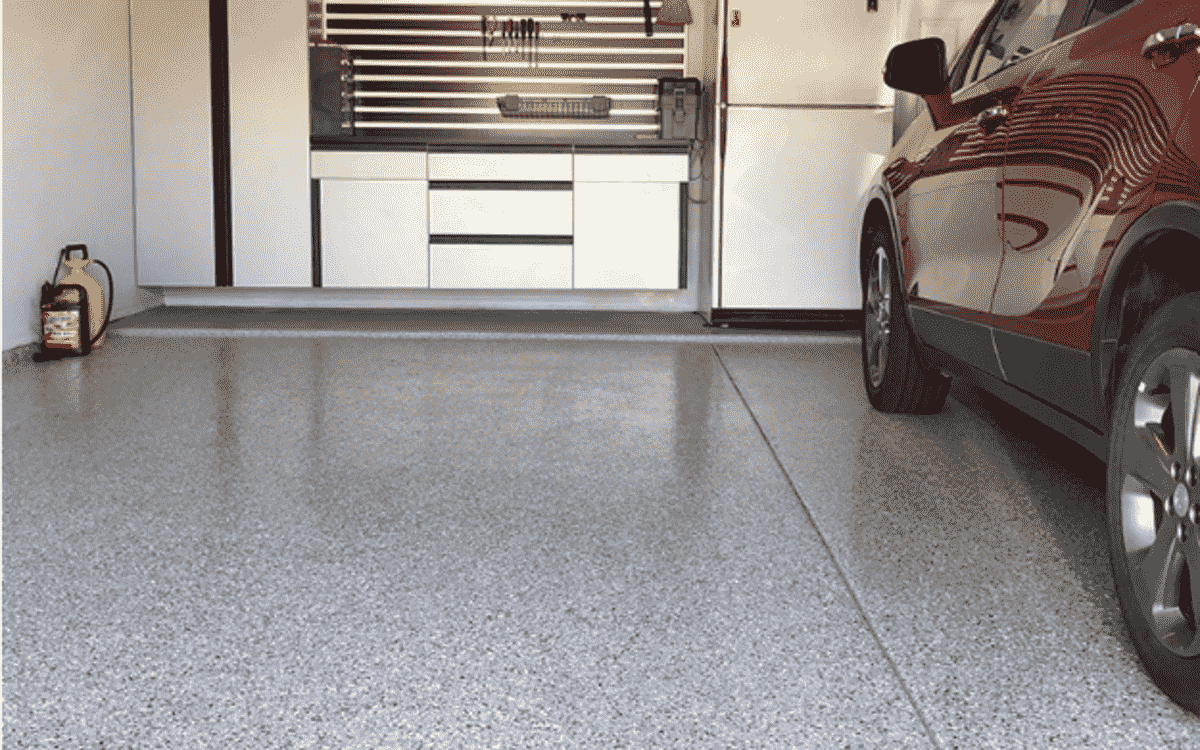
Most homeowners don’t think about their garage floor until something goes wrong. A crack appears. Oil stains spread. The surface starts flaking. And suddenly, the floor that was “fine” for years becomes impossible to ignore.
The good news? A quality floor upgrade solves all of that. It protects your concrete. It looks great. And it adds real value to your home.
The harder part is figuring out what it actually costs — and why quotes from different contractors can vary so much. That’s exactly what this guide covers. No vague ranges, no sales pressure. Just honest numbers and practical advice.
If you’re in Woodland Park, NJ or nearby, you’ve probably noticed that garage upgrades have become more popular over the last few years. Homeowners are turning garages into workshops, gyms, and storage spaces. That shift has pushed more people to invest in proper flooring systems and garage epoxy floor coatings are consistently at the top of the list.
Why epoxy? It bonds directly to concrete. It resists chemicals, oil, and moisture. It’s easy to clean. And it looks professional. For most residential garages, it’s the best combination of performance and price you’ll find.
Quick Cost Summary: What Homeowners Are Paying Right Now
Before we get into details, here’s what you can realistically expect to pay.
| Garage Size | Square Footage | Average Cost (Pro Install) |
| 1-Car Garage | 200–250 sq ft | $800 – $1,800 |
| 2-Car Garage | 400–500 sq ft | $1,800 – $4,500 |
| 3-Car Garage | 600–900 sq ft | $3,500 – $8,500 |
| Coating Type | Cost Per Sq Ft | Lifespan |
| Water-Based Epoxy | $1 – $3 | 3–5 years |
| Solvent-Based Epoxy | $3 – $5 | 7–10 years |
| 100% Solid Epoxy | $4 – $7 | 10–15 years |
| Polyurea Coating | $5 – $9 | 15–20 years |
| Polyaspartic Coating | $6 – $12 | 15–25 years |
These numbers include labor and basic surface prep. Add-ons, crack repair, and old coating removal will push costs higher. We’ll break all of that down below.
Why Garage Floors Need More Than Basic Concrete
Bare concrete was never meant to be a finished floor. It’s porous. It absorbs oil, water, and chemicals. It stains permanently. It dusts constantly.
Over time, moisture seeps through from below. Temperature changes cause the slab to expand and contract. That leads to cracking. In garages, you also add the weight of vehicles, dropped tools, and chemical spills from car maintenance.
The result? An uncoated garage floor takes a beating year after year. Repairs pile up. Cleaning becomes a losing battle. And eventually, the floor starts looking like a problem rather than a foundation.
A proper coating system changes all of that. It seals the surface. It creates a barrier against moisture and chemicals. It makes the floor easier to maintain. And it dramatically improves how the space looks and functions.
For Woodland Park, NJ homeowners dealing with cold winters and wet springs, this is especially relevant. Freeze-thaw cycles are brutal on uncoated concrete. A well-applied coating extends the life of the slab significantly.
5 Biggest Factors That Drive Your Final Price
Two garages with the same square footage can get very different quotes. Here’s why.
Garage size is the most obvious factor. Larger floors cost more. But cost-per-square-foot often goes down as size increases, because fixed labor costs are spread over a bigger area.
Coating type makes a bigger difference than most people expect. A water-based epoxy kit and a professional polyaspartic system can differ by $8 to $10 per square foot. That’s thousands of dollars on a full garage.
Concrete condition is the wildcard. A clean, flat slab with no cracks is straightforward. A floor with deep cracks, previous coatings, or active moisture issues adds prep time and material costs before the actual coating work even starts.
Surface preparation method determines adhesion. Shot blasting costs more than grinding, but it opens the concrete better and creates a stronger bond. Cutting corners here is the number one reason coatings fail early.
Location and labor rates matter too. Contractors in higher cost-of-living areas charge more for the same work. In Woodland Park, NJ, expect rates to reflect the general cost of skilled labor in the greater New Jersey area.
Coating Types Explained And What Each One Costs
Not all coatings are the same. Each system has a different chemistry, different performance profile, and different price point. Here’s an honest breakdown.
Water-based epoxy is the budget option. It’s what most big-box store kits use. It’s easy to apply. But it’s thin, it doesn’t bond as well, and it typically fails in 3 to 5 years under real garage conditions. Fine for a light-duty space. Not ideal for a working garage.
Solvent-based epoxy is a step up. Better chemical resistance. Better adhesion. Longer lifespan. It requires more ventilation during application and more careful prep work. This is a solid mid-range choice.
100% solid epoxy contains no solvents or water it’s pure epoxy resin and hardener. It’s thicker, denser, and more durable than the diluted versions. Professional installers favor this for residential garages because it performs well and lasts.
Polyurea coatings cure fast and offer excellent flexibility and chemical resistance. They’re often used as topcoats over epoxy bases. More expensive, but the fast cure time is a genuine advantage.
Polyaspartic coatings are the premium option. They cure in hours, work in cold temperatures, resist UV yellowing, and have outstanding abrasion resistance. One-day installation is possible. The cost is higher, but for homeowners who want the best result with minimal disruption, it’s worth considering.
Surface Preparation Costs Nobody Warns You About
Here’s where a lot of budgets get surprised.
Prep work can add $500 to $2,000 to your project. Sometimes more. And it’s not optional — it’s what determines whether the coating lasts 2 years or 15.
Crack repair is the most common add-on. Small surface cracks run $250 to $500 to fill and stabilize. Deep structural cracks or spalling can push $800 or more depending on extent.
Old coating removal is expensive. If you have existing paint, stain, or a previous epoxy coat that’s failing, it needs to come off. Grinding or shot blasting to remove it runs $3 to $8 per square foot on top of the new installation cost.
Moisture testing and mitigation is often overlooked. Concrete slabs in New Jersey basements and garages frequently have elevated moisture levels. A moisture test costs $100 to $200. If moisture is present, a vapor barrier primer or moisture mitigation system adds $500 to $1,500 to the project.
Shot blasting vs. diamond grinding both open the concrete surface for better adhesion, but shot blasting is more thorough. Expect shot blasting to add $1 to $2 per square foot over basic grinding.
The practical advice here: always ask your contractor what’s included in the prep. A low quote that skips proper preparation isn’t a bargain. It’s a future floor failure.
DIY vs. Professional Installation: The Real Comparison
This is a question worth answering honestly.
DIY kits from hardware stores range from $100 to $500 for a two-car garage. They seem attractive. But most are water-based, thin, and not designed for long-term performance. Many fail within a couple of years peeling, chipping, or yellowing under UV exposure.
That doesn’t mean DIY is always wrong. If you have a very light-duty garage, limited budget, and realistic expectations about lifespan, a DIY kit is a reasonable short-term solution.
But if you’re investing in a space you use regularly parking vehicles, doing mechanical work, storing equipment professional installation is the smarter spend.
| Factor | DIY Kit | Professional Install |
| Upfront Cost | $100 – $500 | $1,800 – $6,000+ |
| Lifespan | 2–5 years | 10–25 years |
| Prep Quality | Basic (usually hand sanding) | Shot blast or diamond grind |
| Warranty | Typically none | 2–10 years depending on system |
| Cure Time | 24–72 hours | 12–24 hours (polyaspartic) |
| Failure Risk | High without proper prep | Low with experienced installer |
Professional installers also carry liability insurance. If something goes wrong a bond failure, a prep issue you have recourse. With a DIY kit, you’re on your own.
What Garage Floor Epoxy Cost
When people search for garage floor epoxy cost, they usually have a single number in mind. But the final price is always made up of several components. Understanding each one helps you evaluate quotes accurately.
Here’s what a complete professional quote should include:
Labor — typically the largest line item. Covers surface prep, application, and cleanup. Labor rates in the Woodland Park, NJ area generally run $2 to $5 per square foot depending on the complexity of the job.
Materials — the actual coating system. Primer, base coat, broadcast aggregate (if used), and topcoat. Material quality varies significantly between contractors. Always ask what brand and system they’re using.
Surface prep — may be included in the base quote or listed separately. Confirm this before comparing bids.
Add-ons — decorative flakes, metallic pigments, custom colors, and safety striping are typically quoted separately.
Warranty — a good contractor includes a warranty. The length and coverage varies. Ask specifically what’s covered and what voids the warranty.
If a quote is missing any of these items, ask about it before signing. Surprises after the project starts are always more expensive than surprises in the quote stage.
Add-On Costs That Can Shift Your Budget
The base coating is just the starting point. Here are the most common upgrades and what they add to your total.
Decorative flake systems add color and texture. Vinyl chips are broadcast into the wet base coat before the topcoat goes on. They also add slip resistance. Expect $1 to $3 per square foot extra.
Metallic epoxy finishes create a swirling, three-dimensional look. Popular in showrooms and high-end garages. The material and technique are more expensive add $2 to $5 per square foot.
UV-resistant topcoats are worth adding if your garage gets direct sunlight. Standard epoxy yellows over time under UV exposure. A UV-stable polyaspartic topcoat prevents that. Adds $1 to $2 per square foot.
Anti-slip aggregate is important for safety, especially in wet climates. Aluminum oxide or silica sand broadcast into the topcoat provides grip. Usually a minimal add-on $0.50 to $1 per square foot.
Floor striping and safety markings are a great finishing touch, especially if you use the garage as a workshop or storage area. Adds $200 to $600 depending on complexity.
Lifecycle Cost vs. Upfront Cost
This is the section most guides skip. And it’s the most important one.
Cheap coatings cost more in the long run. That’s not a sales pitch it’s math.
Consider this: a water-based epoxy kit costs $300 and lasts 3 years. A professional 100% solid epoxy system costs $2,500 and lasts 12 years.
Over 12 years, the DIY approach costs $1,200 (four replacements) plus your time and effort each time. The professional system costs $2,500 once.
Now add in the hidden costs: concrete damage from failed coatings, cleaning costs for a stained unsealed floor, potential moisture damage. The professional system wins by a wide margin.
This is why professional garage floor installation services are worth evaluating beyond the upfront number. Ask any contractor to walk you through their lifecycle cost estimate. A good one will do it without hesitation.
The table below shows a simplified 15-year cost comparison:
| Coating Type | Upfront Cost (500 sq ft) | Replacement Cycle | 15-Year Total Cost |
| DIY Water-Based Epoxy | $300 | Every 3 years | ~$1,500 |
| Professional 100% Epoxy | $2,500 | Every 12 years | ~$2,700 |
| Professional Polyaspartic | $4,000 | Every 20 years | ~$4,000 |
Over time, the gap narrows significantly and the professional options win on quality and convenience.
How to Read a Quote and Spot Red Flags
Getting quotes from multiple contractors is smart. But knowing how to read them is equally important.
A solid quote should include all of this:
- Total square footage being coated
- Specific coating system (brand, product name, number of coats)
- Surface preparation method (shot blast, grind, acid etch)
- Line items for crack repair and moisture work if needed
- Add-ons listed separately (flakes, topcoat upgrades)
- Timeline and cure time before use
- Warranty terms in writing
Red flags to watch for:
A vague quote that just says “epoxy floor $X” is a problem. You don’t know what you’re getting. An unusually low bid often means thin material, skipped prep, or no warranty.
Be cautious of contractors who can’t tell you the specific product they’re using. Reputable installers know exactly what they’re applying and why.
Also watch out for high-pressure urgency tactics. “This price is only good today” is a sales technique, not a sign of a quality contractor.
Ask every contractor the same set of questions: What system are you using? How do you prep the surface? What’s your warranty? How long have you been doing this? The answers tell you a lot.
How to Save Money Without Cutting Corners
There are legitimate ways to reduce costs without compromising quality.
Schedule in the off-season. Contractors are busier in spring and summer. Fall and winter often come with lower rates or more flexibility. For Woodland Park, NJ homeowners, late fall is a good window temperatures are still workable for most coating systems.
Bundle projects. If you need other concrete work done on a patio, basement floor, or commercial space getting everything quoted together often reduces the per-square-foot cost.
Do your own clearing. Moving vehicles, shelving, and stored items before the crew arrives saves labor time. Most contractors will charge for this if they have to do it.
Choose the right coating for your actual use. A homeowner who parks one car in a clean garage doesn’t need a $10-per-square-foot polyaspartic system. Match the coating to your actual usage. A knowledgeable contractor will tell you the same.
Get three quotes minimum. Pricing varies. Three quotes give you a realistic sense of the market and help you identify outliers in both directions.
What the Installation Process
Knowing what to expect on installation day removes a lot of stress.
Day before: Clear the garage completely. Sweep and remove any loose debris. Make sure the contractor can access water and power.
Day 1 — Surface Prep: This takes the most time. Shot blasting or grinding, crack repair, cleaning, and moisture priming. For a standard 2-car garage, expect 4 to 6 hours just for prep.
Day 1 or 2 — Base Coat: The first coat of epoxy or primer goes down. Decorative flakes are broadcast at this stage if included. Cure time varies standard epoxy needs overnight, polyaspartic needs a couple of hours.
Topcoat: Once the base coat has cured, the topcoat is applied. This is the final protective layer that determines chemical resistance and surface finish.
Cure time before use: Walking on the floor typically takes 12 to 24 hours. Light vehicle traffic usually takes 48 to 72 hours. Full cure for heavy loads can take 5 to 7 days depending on the system.
Important: Don’t rush it. Parking on an insufficiently cured floor can cause permanent tire marks or surface damage.
Tips Before You Commit
A few things worth doing before you sign anything.
Test for moisture. Tape plastic sheeting to the concrete floor and leave it for 24 hours. If moisture collects underneath, tell your contractor. It needs to be addressed before any coating goes down.
Check your drainage. Make sure your garage floor drains properly. Pooling water is a problem for any coating system. Address drainage issues before the installation.
Ask for references. A contractor who’s been working in the Woodland Park, NJ area for years should have no problem providing local references. Ask to see finished jobs in person if possible.
Read the warranty carefully. What’s covered? What voids it? Does it cover material failure, labor failure, or both? Understand this before signing.
Plan for downtime. You’ll be without your garage for at least 2 to 3 days. Plan where you’ll park and store items you need access to.
FAQ
Q: What’s the average cost to coat a 2-car garage in Woodland Park, NJ?
A standard 2-car garage (400–500 sq ft) runs between $1,800 and $4,500 for a professional installation. The range depends on coating type, concrete condition, and any prep work required. Get at least three local quotes to benchmark pricing accurately.
Q: Is epoxy or polyaspartic better for the money?
It depends on your priorities. Epoxy is more affordable upfront and performs well in most residential garages. Polyaspartic costs more but cures faster, resists UV better, and lasts longer. For most homeowners, a 100% solid epoxy system is the sweet spot of cost and performance.
Q: Can I install garage floor coating myself and save money?
You can, but manage your expectations. DIY kits are significantly thinner than professional systems and typically last 3 to 5 years. If your garage sees regular vehicle traffic or chemical exposure, professional installation is a much better investment over time.
Q: How long before I can park on a freshly coated floor?
Most epoxy systems need 48 to 72 hours before light vehicle traffic. Polyaspartic systems can handle it in 12 to 24 hours. Always ask your specific contractor — cure times vary by product, temperature, and humidity.
Q: Does a garage floor coating increase home resale value?
Yes. A clean, coated garage floor is a visible upgrade that buyers notice. Industry estimates suggest a quality floor coating adds $2 to $4 per square foot to perceived value. It also signals that the homeowner maintained the property well.
Q: What’s the cheapest option that still holds up?
A professionally applied solvent-based or 100% solid epoxy is the most affordable durable option. Expect to pay $3 to $5 per square foot for a system that realistically lasts 10 or more years with basic maintenance.
Q: What should I do if my concrete has cracks?
Minor hairline cracks are normal and can be filled before coating. Deep or actively moving cracks may indicate a structural issue have a contractor assess before coating. Coating over an unstable crack will just cause the coating to crack in the same place.